
PRACTICAL
VISIBLE
Structured Lessons, Real Impact
A calm start. A clear focus. Practical music-making. Visible progress.
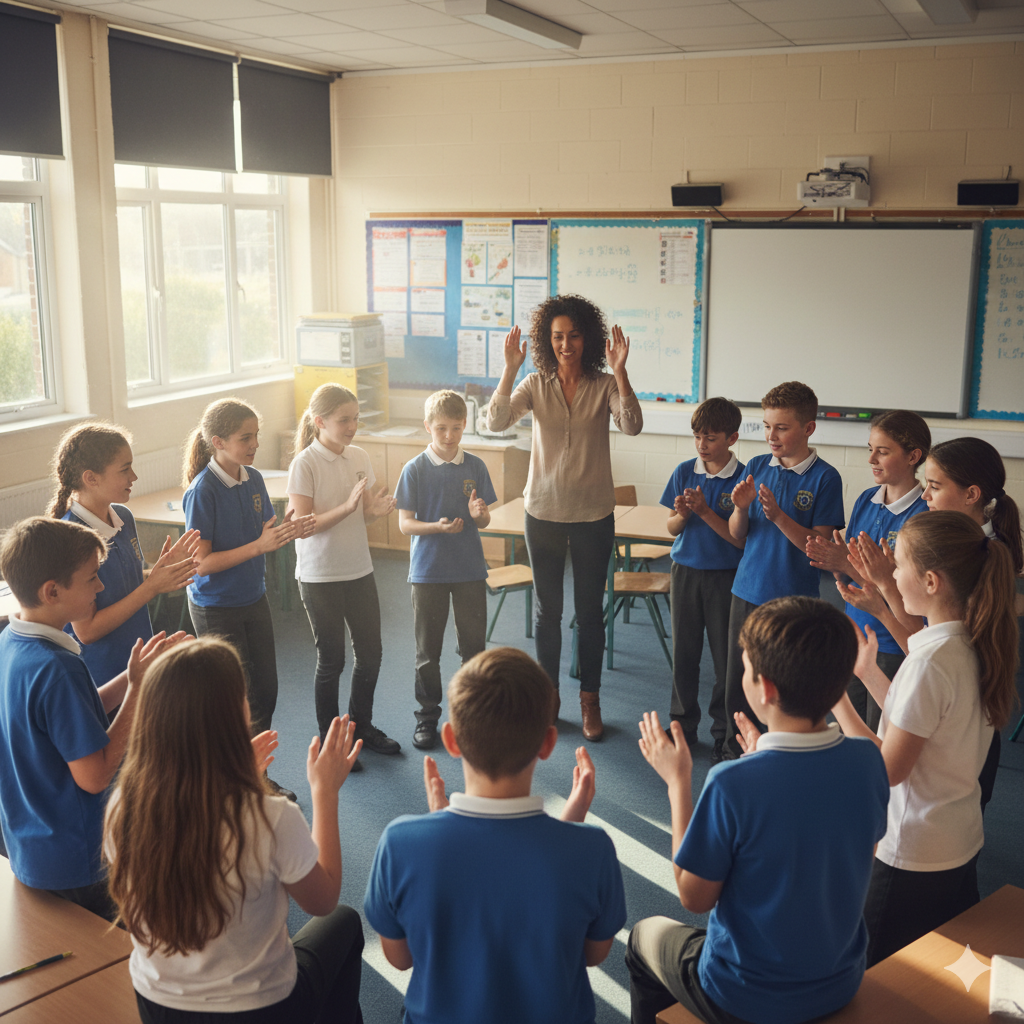
Music Ready to Teach is built around a clear lesson rhythm that helps teachers deliver calm, practical and purposeful music lessons.
Each lesson follows a familiar structure so pupils know what to do, teachers know what to check, and more time is spent making music.
Predictable routines
·
Visible pupil progress
·
Structured independence
·
Predictable routines · Visible pupil progress · Structured independence ·
-

Start Calm
Every lesson begins with clear routines and quick retrieval so pupils know exactly what to do from the moment they enter. This creates a settled classroom where learning starts straight away.
-
Teach Clearly
Each lesson introduces one clear Big Idea with focused key terms and simple teacher guidance. Pupils understand what they are learning, why it matters and how it connects to making music.
-

Make Music
Guided practice moves pupils from watching and listening into doing, with modelling and support built in. Independent practice gives pupils time to rehearse, perform, compose and improve.
-
Show Progress
Reflection and progress tracking help pupils recognise what they have learned and what to improve next. Teachers get visible evidence of knowledge, skill and confidence developing over time.
Why our lessons work
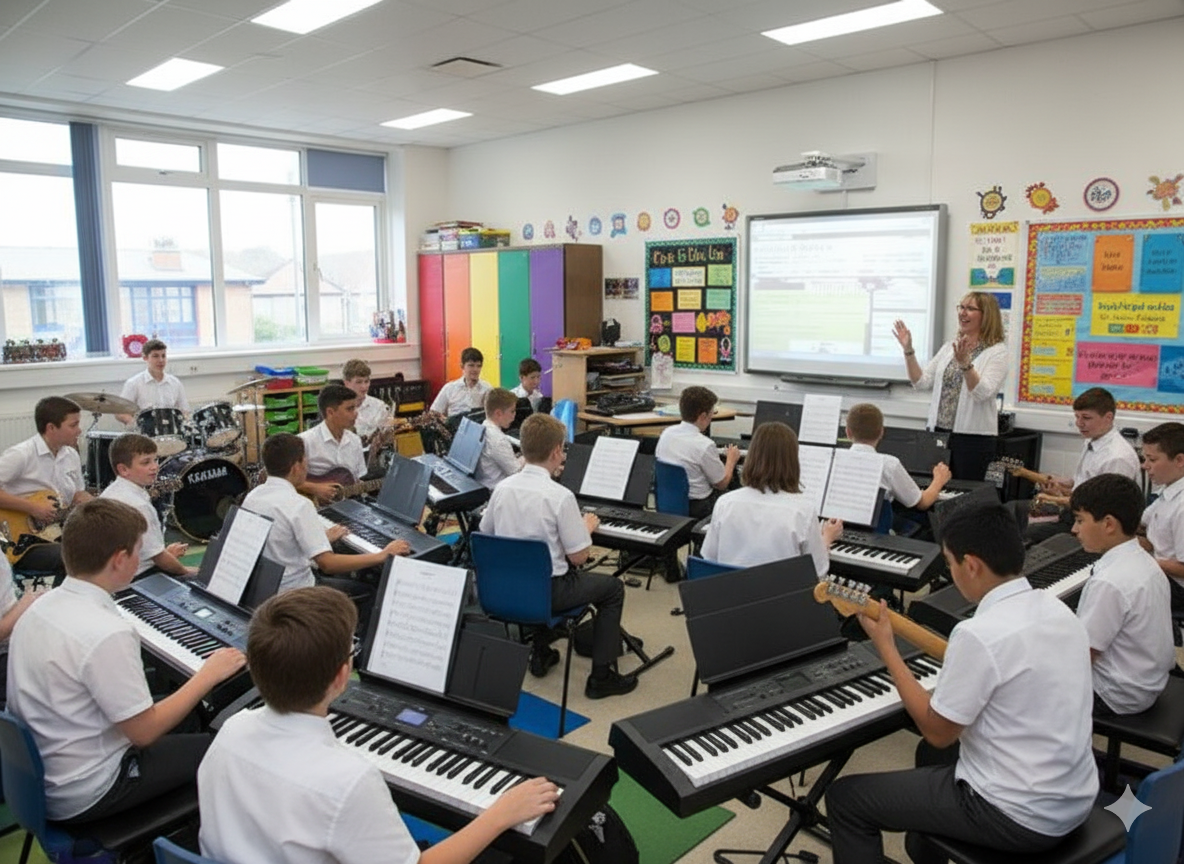
Music classrooms are busy places. Pupils need routines. Teachers need clarity. Instruments need managing. Learning needs to stay practical.
That is why Music Ready to Teach lessons follow a consistent method.
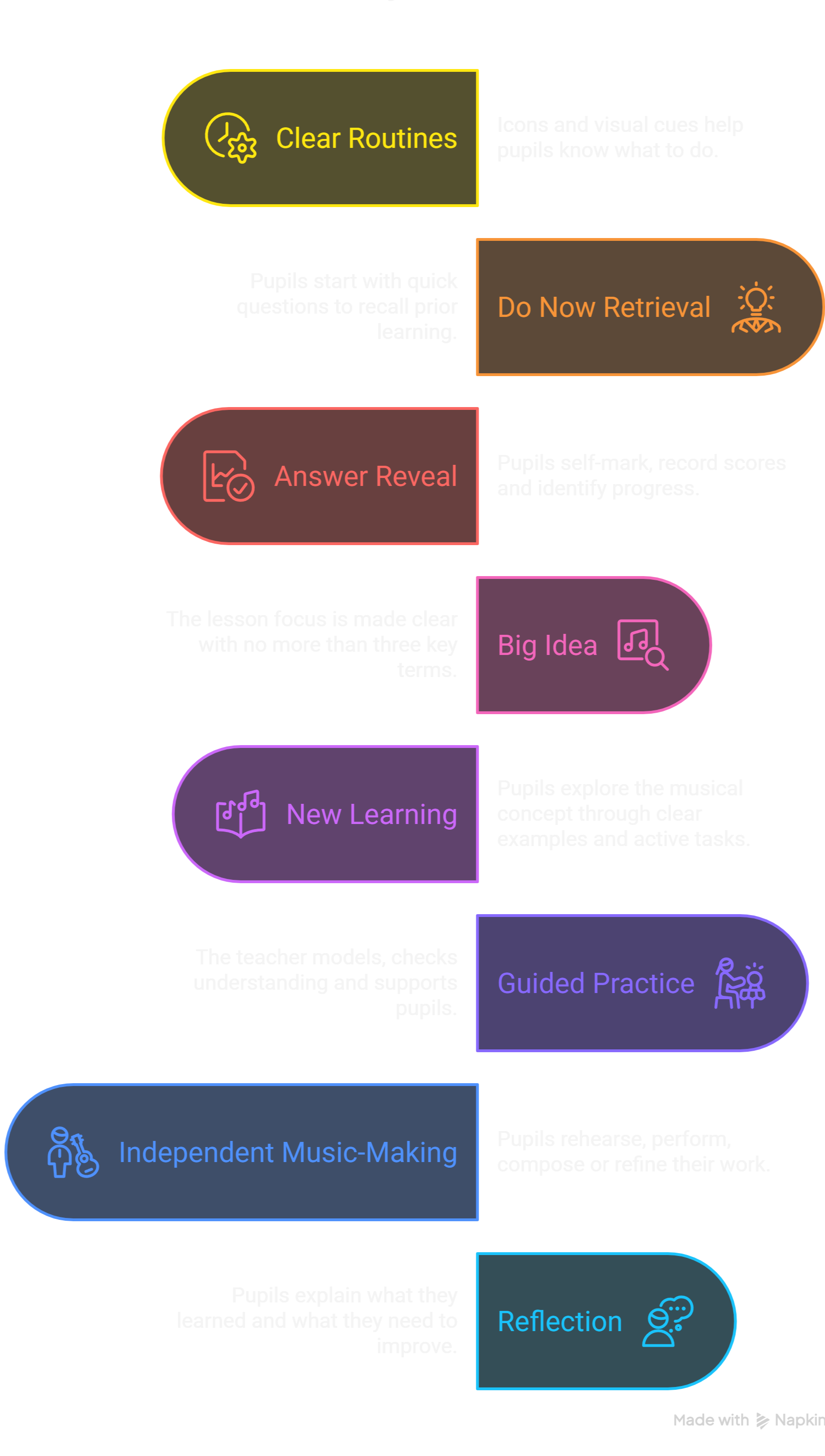
The structure stays familiar, but the music changes. Pupils enter calmly, retrieve prior learning, understand the Big Idea, practise with support, make music independently and reflect on their progress.
This gives teachers a reliable framework without removing professional judgement. Specialists can adapt and extend. Non-specialists can deliver with confidence.
Clear Routines

Every lesson begins with simple visual cues.
Icons show pupils what they should be doing, whether they are using whiteboards, updating progress trackers or moving to instruments.
Over time, these cues help pupils recognise the flow of the lesson and prepare for each stage with greater independence.
Why it matters:
Clear routines reduce uncertainty, support behaviour and make transitions smoother.
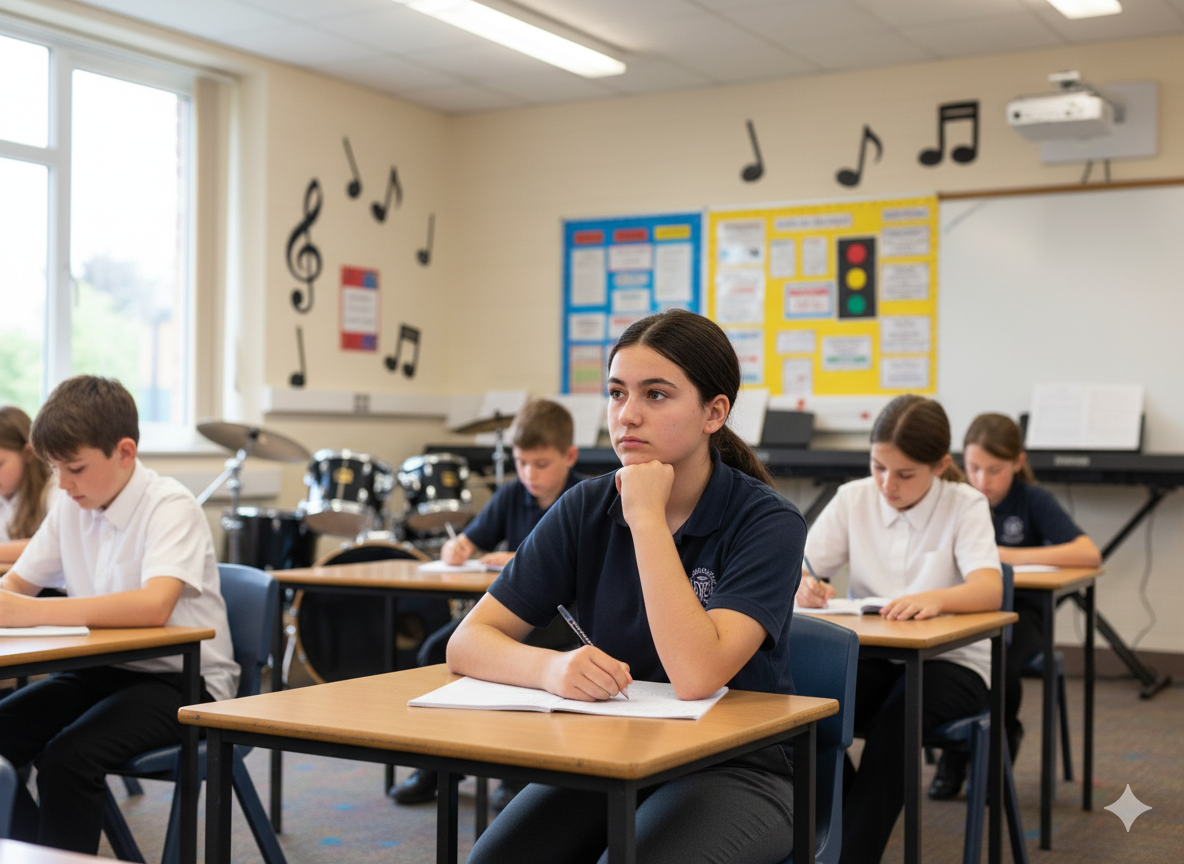
Do Now retrieval
Each lesson starts with a short retrieval task.
Pupils answer quick questions as they enter the room. This settles the class, supports a calm register routine and helps pupils recall important knowledge from previous lessons.
The task is short, focused and easy to self-mark.
Why it matters:
Retrieval helps pupils remember more over time and gives teachers a quick snapshot of what pupils know.
Every lesson has a clear ‘Big Idea.’
This gives pupils a simple focus for the lesson. Alongside it, each lesson introduces a small number of key terms so pupils can understand and use the language of music properly.
No overload. No long vocabulary lists. Just the words that matter most.
Why it matters:
Pupils learn better when they know the purpose of the lesson and the language they need.
What’s the Big Idea?
New learning
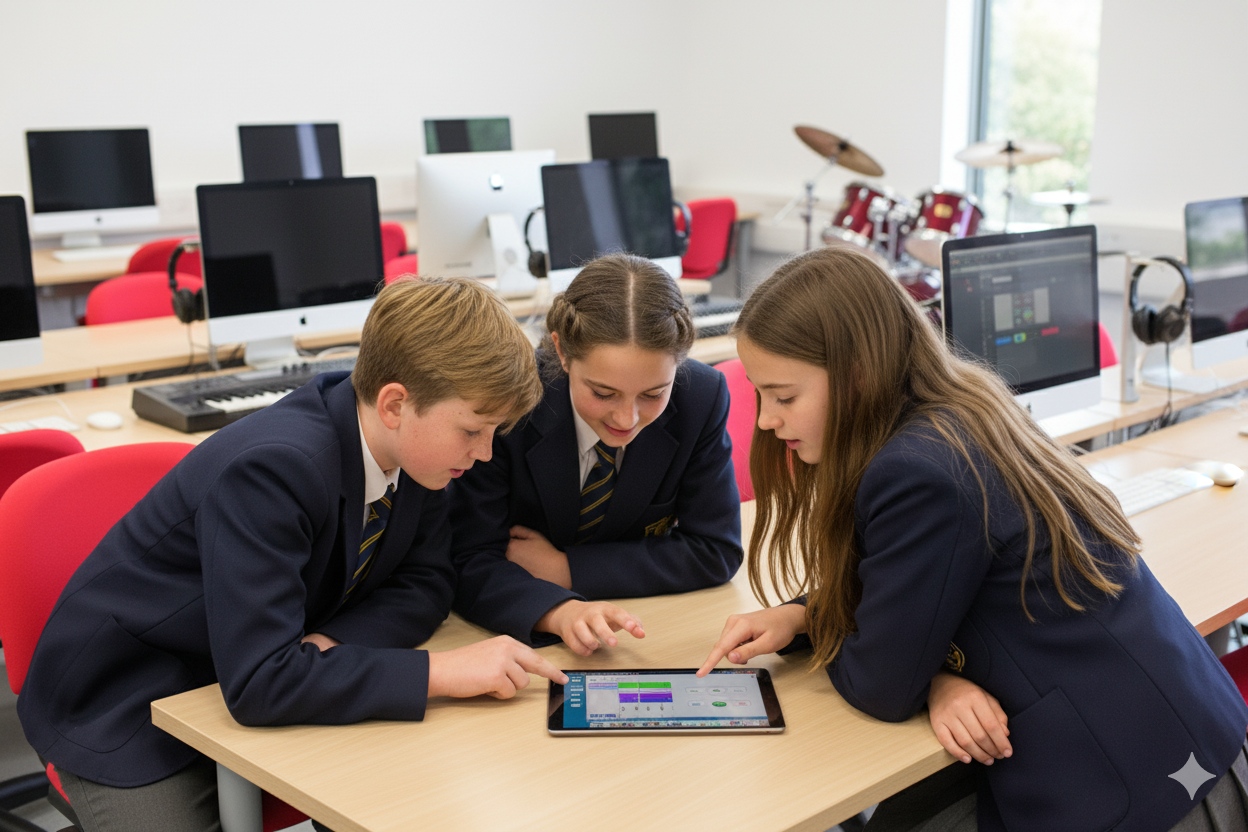
The new learning section introduces the musical concept.
This might involve listening, watching, describing, clapping, singing, playing, comparing sounds or exploring notation.
Slides are kept uncluttered. Teacher notes explain what to do, what to check and when to move on.
Why it matters:
New knowledge is introduced clearly, actively and in a way that prepares pupils for practical work.
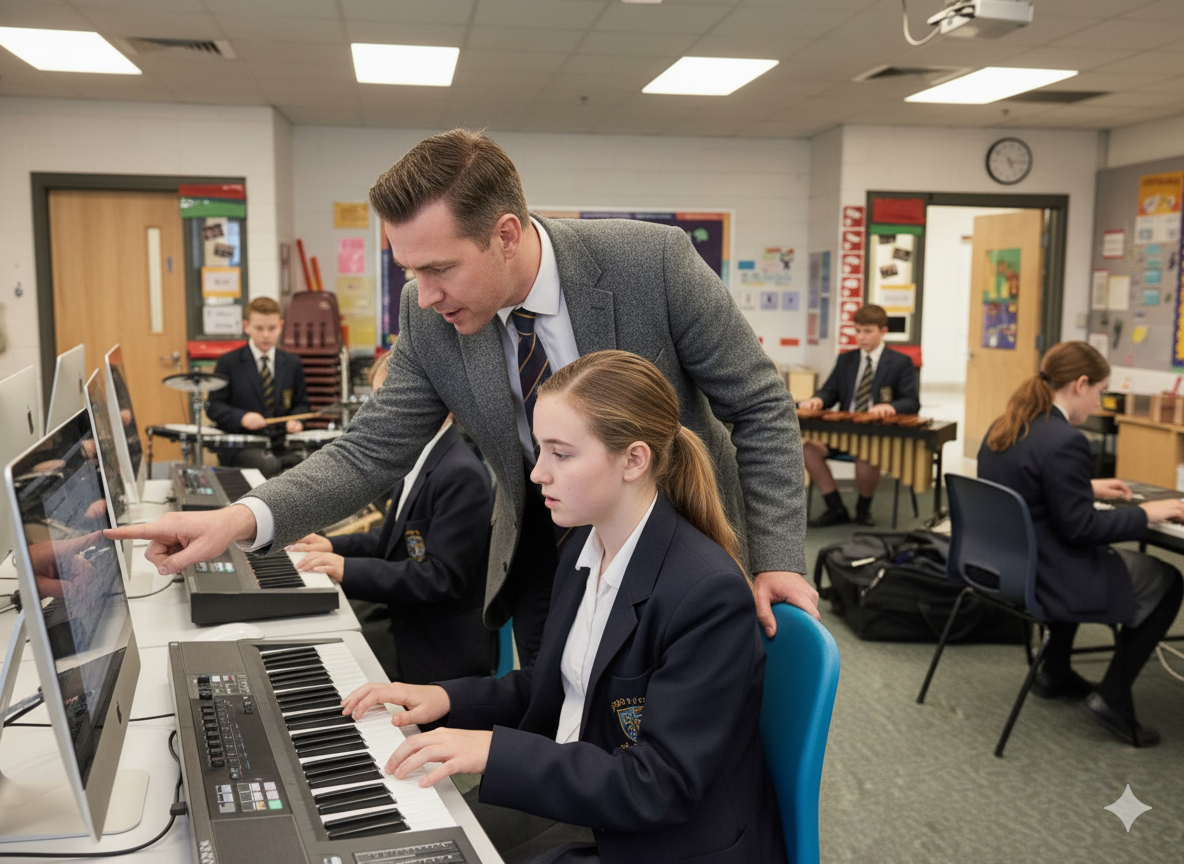
Guided practice.
Guided practice helps pupils move from understanding to doing.
The teacher models, demonstrates, pauses, checks and corrects. Pupils may follow a play-along, rehearse a rhythm, try a keyboard part or practise a short musical idea before working more independently.
Why it matters:
Pupils need to see and hear what success looks and sounds like before they do it alone.
Independent music-making
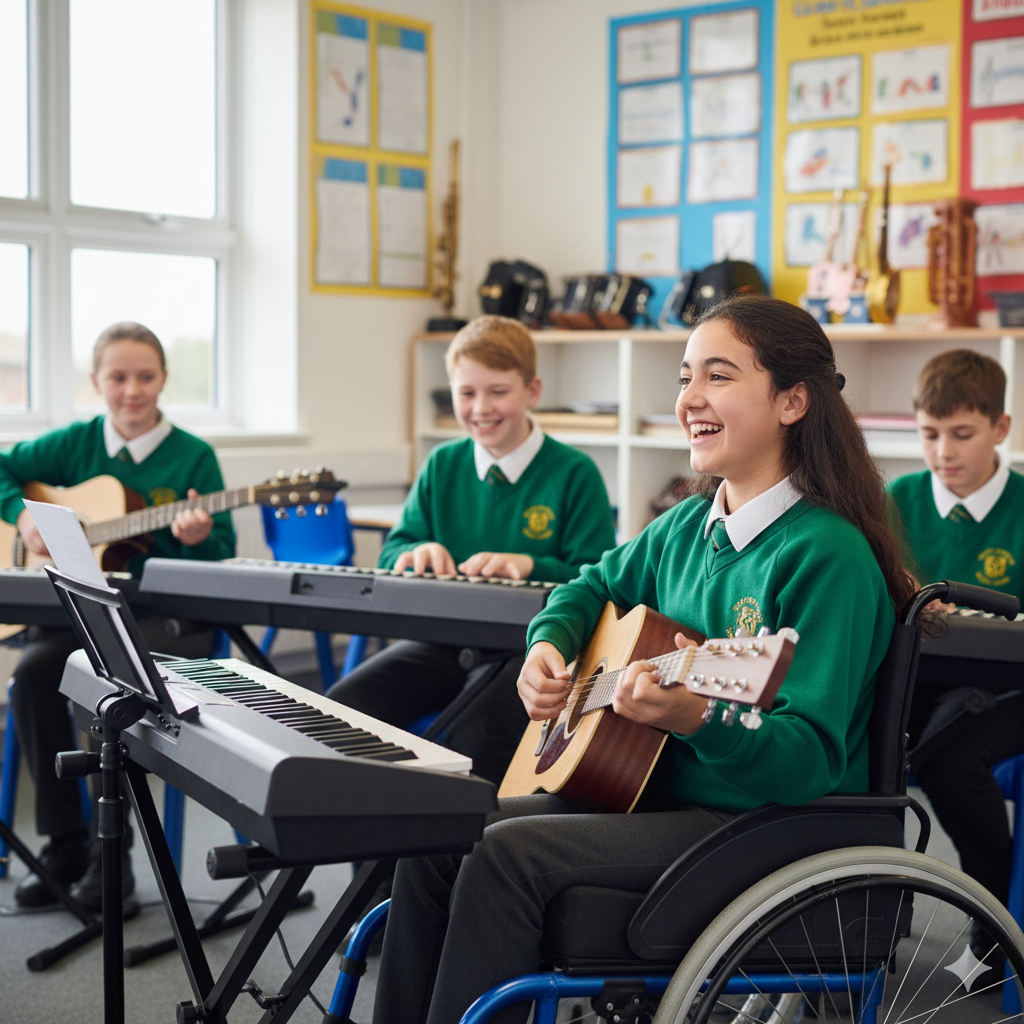
Independent practice is where pupils make music.
They rehearse, perform, compose, arrange, record, experiment or refine their work. The teacher circulates, listens, questions, supports and helps pupils improve.
This is the heart of the lesson.
Why it matters:
Pupils learn music by making sound, shaping ideas and improving through practice.
Reflection
Every lesson ends with a short reflection.
Pupils think about what they learned, what improved and what they need to develop next. This links the practical work back to the lesson focus and helps pupils understand their progress.
Why it matters:
Reflection turns activity into learning.
What Teachers Can Expect:
Clear
Teachers know what to do. Pupils know what is expected.Practical
Every lesson moves towards active music-making.Consistent
The structure stays familiar so pupils can focus on the music.Inclusive
Routines, scaffolds and visual cues help more pupils access the lesson.Flexible
Specialists can adapt and extend. Non-specialists can deliver with confidence.Evidence-informed
Retrieval, modelling, practice, reflection and progress tracking are built into the lesson flow.